
Africa’s AI Moment: Why Universities Must Upskill Now
Sign in to like this article.
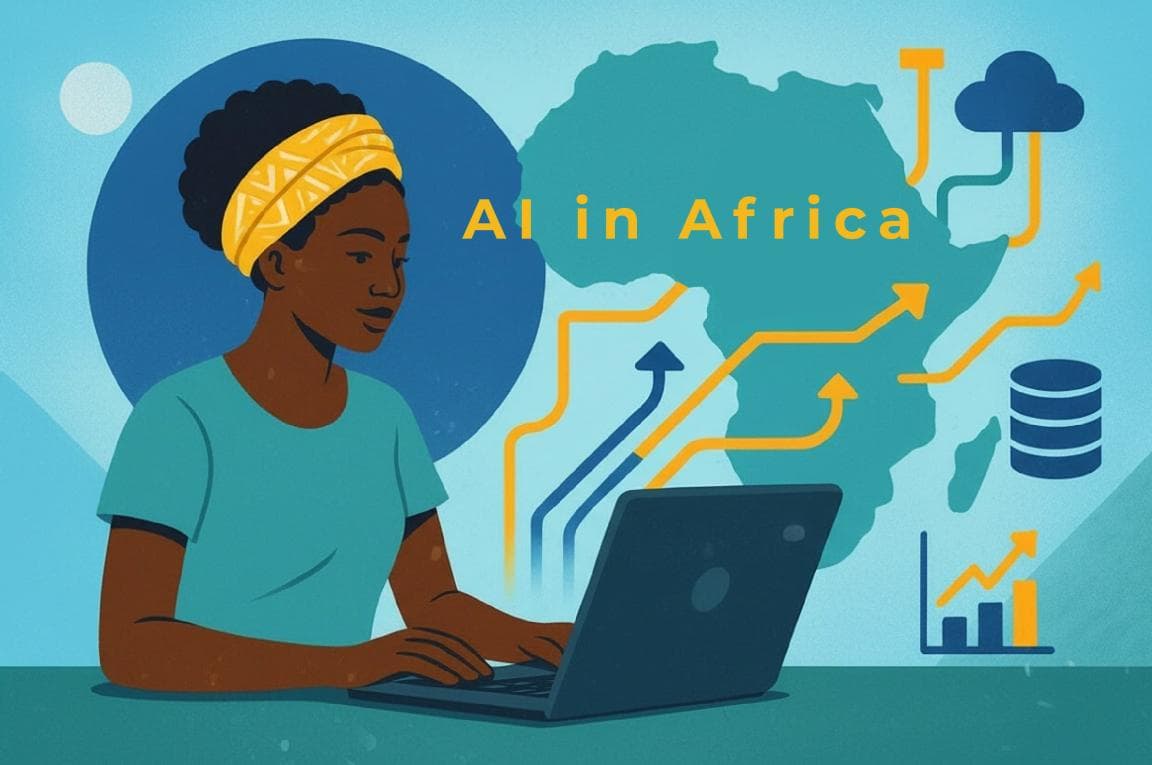
Across the world, artificial intelligence is no longer a future concept — it is already reshaping how we learn, work, and build economies. From automation to data-driven decision-making, AI is becoming the foundation of modern innovation.
But in Africa, this shift presents something even more powerful: an opportunity to leap forward — not catch up.
At the recent Deep Tech Summit in Morocco, industry leaders and academics gathered to discuss how AI is redefining progress. One message stood out clearly: Africa must act now.
We Are Not Behind — We Are at the Starting Line
According to Khalid Badou of Mohammed VI Polytechnic University, the global AI race is different from past technological revolutions.
Everyone is learning AI at the same time.
This means Africa is not late — it is perfectly positioned to leapfrog traditional development paths. Instead of slowly building outdated systems, institutions can adopt advanced technologies immediately.
That is a rare opportunity.
Universities Must Lead the Shift
Education sits at the center of this transformation.
Some institutions, like UM6P, have already begun integrating tools like ChatGPT into their academic environments — not as a replacement for learning, but as an enhancement.
This is where many universities must rethink their approach.
AI is not just a computer science topic anymore. It affects:
Business and entrepreneurship
Agriculture and climate science
Healthcare and research
Law, policy, and governance
If students are not exposed to AI tools and thinking, they risk graduating into a world they are not prepared for.
Beyond Skills — This Is About Relevance
Upskilling and reskilling is not just about learning new tools.
It is about staying relevant.
Africa has one of the youngest populations in the world — digitally aware, creative, and highly adaptive. With the right AI exposure, this generation could drive innovation across industries faster than ever before.
But without that investment, the gap between potential and reality will only grow.
AI Can Transform Africa’s Core Sectors
The real power of AI in Africa lies in solving local problems.
In agriculture, AI can help farmers predict weather patterns and improve yields
In healthcare, it can support early diagnosis and expand access to care
In fintech, it can improve financial inclusion and reduce fraud
In education, it can personalize learning and increase accessibility
These are not future possibilities — they are already happening globally.
The question is whether Africa will build its own solutions, or depend on others.
Africa Must Define Its Own AI Future
One of the strongest points raised at the summit was this:
Africa should not wait for the rest of the world to define how AI is used.
Instead, it must:
Create its own ethical frameworks
Develop policies that reflect local realities
Build systems that serve African communities
Because AI built elsewhere may not always understand African contexts.
The Real Risk Is Not AI — It’s Inaction
There is often fear around AI replacing jobs or disrupting systems.
But the bigger risk is doing nothing.
Ignoring AI today means:
Losing competitiveness tomorrow
Producing graduates who are unprepared
Missing out on economic growth opportunities
The world is moving — and fast.
A Call to Action
For Africa to fully benefit from AI, action must happen at every level:
Universities must integrate AI into learning and research
Governments must invest in infrastructure and policy
Students and professionals must take initiative to learn and adapt
This is not just a technological shift.
It is a defining moment for Africa’s future.
Discussion
No comments yet. Be the first to start the discussion.